

Table of Contents
If you run a website, whether it is a personal blog, an e-commerce store, or a business platform, keeping it secure should be one of your top priorities. One of the most essential security features offered by modern web hosting providers is malware scanning. But what exactly does malware scanning in hosting mean, and why does it matter so much? In this guide, we will break down everything you need to know about malware scanning hosting, how it works, and why your website cannot afford to go without it.
Understanding Malware and Why It Targets Websites
Malware is short for malicious software. It refers to any programme or code that is designed to damage, disrupt, or gain unauthorised access to a computer system or website. Cybercriminals deploy malware for a wide range of reasons, including stealing sensitive customer data, redirecting visitors to fraudulent websites, sending spam emails, or using your server’s resources to carry out attacks on other systems.
Websites are particularly attractive targets because they are publicly accessible, often handle sensitive data, and may go unmonitored for extended periods. Even a small website with modest traffic can be exploited as part of a larger botnet or used to distribute malicious files to unsuspecting visitors. The consequences of a malware infection can be severe, including blacklisting by search engines, loss of customer trust, and significant financial damage.
What Is Malware Scanning in Web Hosting?
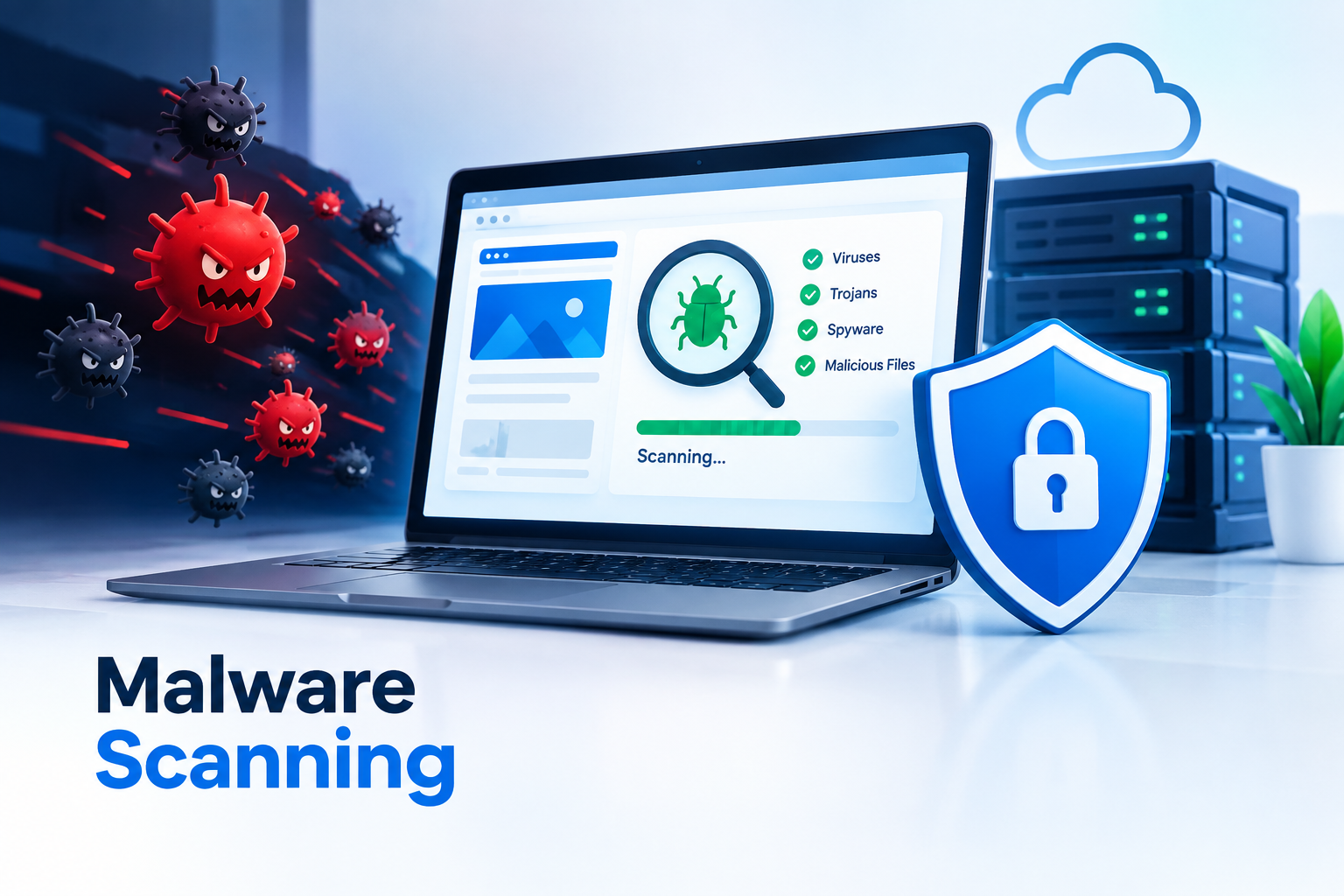
Malware scanning in web hosting refers to the automated process of examining the files, databases, and code stored on a web server to detect any malicious content. Hosting providers that offer this feature will routinely scan your website’s files looking for known malware signatures, suspicious code patterns, backdoors, trojans, ransomware, and other threats.
When malware scanning is integrated at the hosting level, it operates directly on the server where your website lives. This is more effective than relying solely on client-side tools because it can access all files, including those that may not be publicly visible. The scanning engine compares files against a regularly updated database of known malware signatures and also uses heuristic analysis to identify suspicious behaviour that may indicate a previously unknown threat.
How Does Malware Scanning Work?
Malware scanning at the hosting level typically works through a combination of signature-based detection and behavioural analysis. Here is a closer look at both methods:
Signature-based detection involves comparing files on your server against a database of known malware signatures. Each piece of malware has a unique fingerprint, and when the scanner finds a match, it flags the file as infected. This method is highly effective for identifying known threats but may miss brand-new or heavily obfuscated malware.
Heuristic and behavioural analysis goes a step further by examining the behaviour and structure of code. If a file exhibits characteristics commonly associated with malicious activity, even if it does not match a known signature, the scanner may still flag it for review. This approach helps catch zero-day threats and more sophisticated attacks.
Most hosting providers that offer malware scanning will run these checks on a scheduled basis, such as daily or weekly, and some offer real-time scanning that monitors file changes as they happen.
Key Features of Malware Scanning Hosting Services
Not all malware scanning hosting solutions are created equal. When evaluating a hosting provider or a security add-on, look for the following features:
Automated Scheduled Scans
Regular, automated scans ensure that your website is consistently monitored without requiring manual intervention. Daily scans are ideal for websites that update their content frequently or handle sensitive user data.
Real-Time File Monitoring
Some advanced hosting security solutions offer real-time monitoring that detects changes to your website’s files as they occur. This can dramatically reduce the window of opportunity for attackers to cause damage after an initial compromise.
Automatic Malware Removal
Detection alone is not enough. The best malware scanning hosting services will also offer automatic or one-click removal of infected files, saving you time and reducing the technical expertise required to respond to an incident.
Alerts and Notifications
Instant notifications via email or SMS when a threat is detected allow you to act quickly. The faster you respond to a malware infection, the less damage it is likely to cause.
Detailed Reporting
Comprehensive reports help you understand what was found, where it was located, and what action was taken. This information is invaluable for identifying vulnerabilities and improving your overall security posture.
Why Malware Scanning Hosting Is Essential for Every Website Owner
Some website owners assume that malware is only a concern for large enterprises or high-profile targets. This is a dangerous misconception. In reality, automated attack tools scan millions of websites indiscriminately, looking for any vulnerability they can exploit. Small and medium-sized websites are often targeted precisely because their owners are less likely to have robust security measures in place.
Search engines like Google actively penalise websites that have been compromised. If malware is detected on your site, it may be flagged with a warning that deters visitors, or it could be removed from search results entirely. Recovering from such a penalty can take weeks or even months, causing significant harm to your online visibility and revenue.
For e-commerce websites and any platform that collects personal data, the stakes are even higher. A malware infection that exposes customer information can result in regulatory fines under data protection laws such as the UK GDPR, as well as lasting reputational damage.
For more expert guidance on keeping your web presence secure and well-managed, visit the DaManager blog for a range of helpful resources and insights.
How to Choose a Hosting Provider With Strong Malware Scanning
Check What Is Included as Standard
Some hosting providers include basic malware scanning as part of their standard packages, while others offer it as a premium add-on. Before committing to a hosting plan, check whether malware scanning is included and what level of protection it provides.
Look for Regular Database Updates
A malware scanner is only as good as its threat database. Ensure that the provider updates their malware definitions regularly, ideally on a daily basis, to keep up with the ever-evolving threat landscape.
Consider Managed Hosting Options
Managed hosting plans often include proactive security monitoring, including malware scanning, as part of the service. This can be an excellent option for business owners who do not have the technical resources to manage security in-house.
Evaluate Customer Support
If malware is detected, you want to be able to reach knowledgeable support staff quickly. Look for hosting providers that offer 24/7 support with experience in handling security incidents.
Additional Security Measures to Complement Malware Scanning
Whilst malware scanning hosting is a critical component of your website’s security strategy, it works best when combined with other protective measures. Consider implementing the following alongside your malware scanning solution:
- Web Application Firewall (WAF): Filters and monitors HTTP traffic to block malicious requests before they reach your website.
- SSL Certificate: Encrypts data transmitted between your website and its visitors, protecting sensitive information.
- Regular Backups: Maintain frequent backups of your website so that you can restore a clean version quickly if an infection occurs.
- Strong Password Policies: Use complex, unique passwords for all hosting accounts, CMS logins, and databases.
- Software Updates: Keep your CMS, plugins, and themes updated to patch known vulnerabilities.
Final Thoughts on Malware Scanning in Web Hosting
Malware scanning hosting is not a luxury, it is a necessity for any website owner who takes their online presence seriously. By choosing a hosting provider that offers robust, regularly updated malware scanning, you significantly reduce the risk of your website being compromised, your visitors being harmed, and your business suffering the consequences of a security breach.
The digital threat landscape is constantly evolving, and cybercriminals are becoming increasingly sophisticated in their methods. Investing in a hosting solution with comprehensive malware scanning, combined with a broader security strategy, is the most effective way to protect your website, your data, and your reputation for the long term.